Self-Defense Tips for Solo Women Travelers
Practical self-defense techniques, situational awareness skills, and personal safety strategies every solo female traveler should know before departure.

This post may contain affiliate links. Disclosure
Let us be honest about something that most travel guides avoid: the reason solo women need to think about personal safety in ways that solo men generally do not is not because the world is extraordinarily dangerous. It is because the specific threats women face, harassment, stalking, sexual assault, and targeted theft, exist on a spectrum that ranges from annoying to life-threatening, and the risk is present in virtually every country on earth. This is not fear-mongering. It is reality, and ignoring it does not make it disappear.
The empowering truth is that personal safety is a skill set, not a personality trait. It can be learned, practiced, and deployed. The vast majority of threatening situations can be prevented through awareness and avoided through early intervention. Physical self-defense, while important, is the last line of defense, not the first. This guide covers the full spectrum: from the awareness techniques that prevent 90 percent of problems to the physical strategies that address the remaining 10 percent.
Situational Awareness: Your Primary Defense
Situational awareness is the practice of paying attention to your environment and recognizing potential threats before they become actual dangers. It is not paranoia. It is the same skill a driver uses when checking mirrors and monitoring traffic. Applied to personal safety, it looks like this:
The Cooper Color Code
Developed by firearms instructor Jeff Cooper, this framework provides a practical way to think about awareness levels.
White (Unaware): You are absorbed in your phone, music, or thoughts. You are not paying attention to your surroundings. This is the state most people walk around in, and it is the state most vulnerable to surprise.
Yellow (Relaxed Alertness): You are aware of your surroundings without being anxious. You notice who is around you, where the exits are, what feels normal and what does not. This is the baseline state you should maintain while traveling solo.
Orange (Specific Alert): Something has triggered your attention. A person is following you, a situation feels wrong, or your instincts are signaling danger. You are now actively assessing the potential threat and planning your response.
Red (Action): A threat is confirmed and you are executing your response plan, whether that means leaving the area, calling for help, or physically defending yourself.
The goal is to stay in Yellow during your travels. Not tense, not paranoid, but present and observant. Most experienced solo women travelers describe this as a state that becomes natural with practice, like a background awareness that does not diminish their enjoyment of the experience but allows them to notice anomalies.
Practical Awareness Habits
When walking: Notice who is behind you. Glance back periodically, or use reflective surfaces (shop windows, car mirrors) to check. Walk with purpose and confidence. Predators select targets who appear distracted, uncertain, or vulnerable.
When entering a building: Identify the exits. In a restaurant, sit facing the door. In a bar, keep your line of sight open. These small habits give you critical seconds of warning if something goes wrong.
When using transportation: In taxis and rideshares, sit behind the driver, keep the door unlocked, and follow the route on your phone. On public transit, stand near other women or families. At night, choose well-lit, populated train cars.
When at your accommodation: Note the location of fire exits, security cameras, and the front desk. Check that your room’s lock, deadbolt, and chain work. Keep your key accessible when walking to your room.
 Photo credit on Pexels
De-Escalation Techniques
Most threatening situations can be resolved without physical confrontation. De-escalation is the art of reducing tension and creating distance.
Verbal De-Escalation
Use a firm, clear voice. Not aggressive, not pleading — firm. “I am not interested. Please leave me alone.” Direct statements are more effective than questions or explanations. You do not owe anyone a reason for wanting to be left alone.
Set boundaries early. The earlier you set a boundary, the easier it is to enforce. If someone’s attention makes you uncomfortable, address it immediately rather than hoping it will stop on its own. Discomfort that is ignored tends to escalate.
Name the behavior. “You are following me. Stop.” “You are standing too close. Please step back.” Naming what someone is doing draws the attention of bystanders and makes the aggressor aware that their behavior is being observed and will be remembered.
Involve bystanders. If you are in a public place, directly address specific people. “You in the blue jacket, can you help me? This person will not leave me alone.” Research shows that directing a request at a specific person is far more effective than a general call for help, because it eliminates the bystander effect.
Body Language
Stand tall. Squared shoulders, upright posture, and a steady gaze communicate confidence and resolve.
Maintain eye contact. Brief, direct eye contact signals awareness. You have seen them. You can identify them. This alone deters many potential aggressors.
Create distance. If someone is too close, step back or to the side. Put physical objects (tables, posts, benches) between you. If they continue to close the distance, this is a clear warning sign that requires escalation of your response.
Do not smile to defuse. Women are socially conditioned to smile when uncomfortable. In a potentially dangerous situation, a smile can be misinterpreted as encouragement. A neutral or serious expression communicates your actual state more accurately.
Physical Self-Defense Basics
If awareness and de-escalation fail and you are in physical danger, knowing a few basic techniques can create an opportunity to escape. The goal of self-defense is never to win a fight. It is to create enough time and space to get away.
Pre-Trip Self-Defense Training
Taking even a single self-defense workshop before your trip is one of the highest-value investments in your safety. Look for classes specifically designed for women that teach:
- Awareness and prevention (the majority of the class)
- Release techniques for grabs, holds, and chokes
- Striking techniques aimed at vulnerable areas
- Ground defense for situations where you are knocked down
RAD (Rape Aggression Defense) is a free self-defense program offered at hundreds of universities and community centers across the United States and in several other countries. Krav Maga studios worldwide offer women’s self-defense workshops that focus on practical, scenario-based training.
Key Vulnerable Targets
If you must strike, aim for areas that cause maximum pain regardless of the attacker’s size:
Eyes: Even a light poke causes intense pain and temporary blindness. Open-hand strikes toward the eyes are instinctive and effective.
Throat: A strike to the throat disrupts breathing and causes intense discomfort. An open-hand palm strike or even a firm push to the Adam’s apple area is effective.
Groin: A knee strike to the groin is one of the most effective self-defense techniques regardless of the defender’s size or strength.
Knees: A kick to the side of the knee can hyperextend the joint and compromise the attacker’s ability to chase you. The knee is a vulnerable joint that does not benefit from muscle mass.
Instep: Stamping hard on the top of someone’s foot, especially if you are wearing solid shoes, causes intense pain and can break small bones.
Release Techniques
Wrist grab: Rotate your arm toward the attacker’s thumb (the weakest point of the grip) and pull sharply.
Bear hug from behind: Drop your weight, widen your stance, and drive your elbow sharply backward into the attacker’s solar plexus or face. Stomp on their foot simultaneously.
Choke from the front: Tuck your chin to protect your airway. Turn sideways while striking the attacker’s arms away and immediately knee the groin.
The universal follow-up to any release technique is: run toward people and lights while making noise.
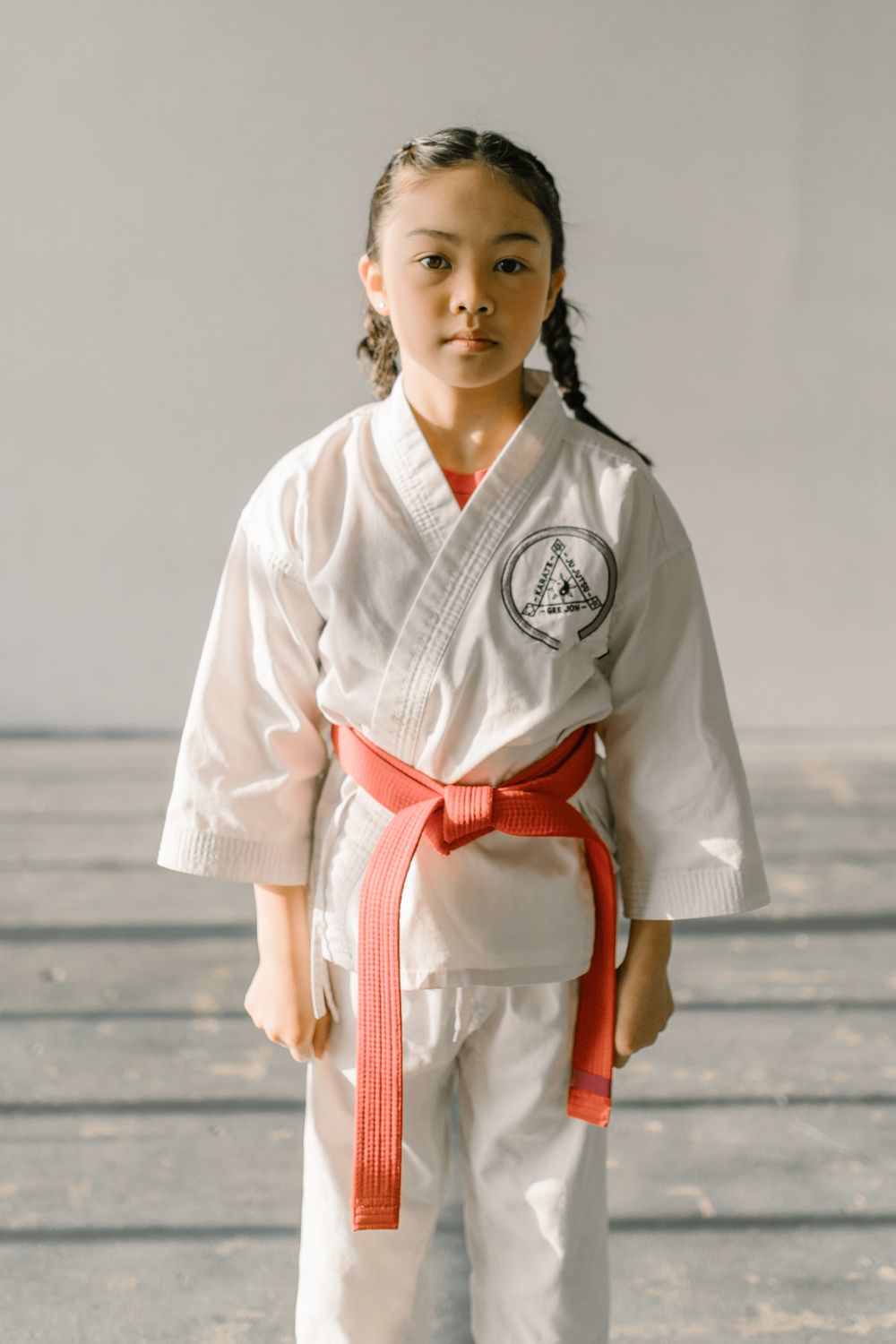 Photo credit on Pexels
Safety Tools and Devices
Personal Alarms
A personal safety alarm (also called a panic alarm) emits a loud siren (typically 120-140 decibels) when activated. The sound startles attackers, draws attention from bystanders, and creates a window to escape. These are legal virtually everywhere, lightweight, inexpensive ($10-25), and effective. Clip one to your bag or keychain and know how to activate it without looking.
Recommended: Birdie, She’s Birdie, SABRE Personal Alarm
Pepper Spray
Pepper spray (OC spray) is one of the most effective non-lethal self-defense tools available. A direct spray to the face causes intense burning, temporary blindness, and difficulty breathing, giving you time to escape.
Important legal notes: Pepper spray is legal for civilian carry in the United States and many other countries, but it is prohibited or restricted in the UK, Australia, most of Europe, and several Asian countries. Research the laws of every country on your itinerary before packing pepper spray. Being caught with a prohibited weapon can result in arrest and criminal charges.
Door Security Devices
Portable door lock: A device that reinforces your hotel room door from the inside, preventing it from being opened even with a key. Addalock and similar products weigh a few ounces and provide significant peace of mind. These work on most inward-opening doors with a standard latch.
Door stop alarm: A wedge that fits under your door and emits a loud alarm if the door is pushed against it. Doubles as a physical barrier and an alert system.
Door hanger alarm: Hangs on the door handle and triggers an alarm if the handle is moved. Less effective as a physical barrier but useful as an early warning system.
Tracking Devices
AirTag or Tile: Place a tracking device in your luggage so you can locate it if stolen. You can also keep one in your wallet for the same purpose. In an emergency, dropping a tracker somewhere can help authorities trace your movements.
Scenario-Specific Advice
Being Followed
If you suspect someone is following you, do not go to your accommodation. This reveals where you are staying. Instead:
- Cross the street. If they cross too, your suspicion is likely correct.
- Enter a busy shop, restaurant, or hotel lobby.
- Tell staff that you are being followed and ask for help.
- Call the police or your emergency contacts.
- If you are near your accommodation, walk past it and go to the nearest public, busy place.
Drink Spiking
Drink spiking remains a serious threat in nightlife settings worldwide.
- Never leave your drink unattended. If you leave it to use the bathroom, get a new one.
- Watch your drink being made and poured. Sit at the bar where you can observe.
- Use a drink cover. Products like NightCap or Drink Savvy provide physical covers for glasses.
- Trust sudden, unexplained intoxication. If you feel significantly more impaired than your consumption warrants, tell a trusted person immediately, get to safety, and seek medical attention if necessary.
Harassment in Public
Public harassment ranges from catcalling to groping to intimidation. Your response depends on the severity and context:
- Verbal harassment (catcalling): Ignoring is usually the safest response. Engaging rarely helps and can escalate the situation.
- Persistent following or verbal threats: Increase your pace, head toward populated areas, and prepare to involve bystanders or authorities.
- Physical contact (groping, grabbing): This is assault. React immediately and loudly: “Do not touch me!” Create distance and seek help from bystanders or authorities.
Hotel Room Intrusion
If someone enters your hotel room uninvited:
- Make noise. Scream, activate your personal alarm, bang on the walls.
- Call the front desk or emergency number immediately.
- If possible, get into the bathroom and lock the door.
- If you have a portable door lock, the intrusion may be prevented entirely.
 Photo credit on Pexels
Building a Safety Mindset
The most effective self-defense tool you carry is your mind. Here are the mental frameworks that experienced solo women travelers rely on.
Your safety is worth more than politeness. Women are socialized to be accommodating, to avoid making scenes, to give people the benefit of the doubt. In a safety situation, these instincts can be dangerous. You do not owe a stranger your time, attention, personal information, or compliance. Being “rude” to someone who makes you uncomfortable is not actually rude. It is self-preservation.
Trust your gut. Research in the field of threat assessment consistently shows that intuition is a remarkably accurate early warning system. The feeling that something is wrong is your subconscious processing cues that your conscious mind has not yet identified. Gavin de Becker’s book “The Gift of Fear” explores this in depth and is recommended reading for all solo travelers.
Avoidance is victory. There is no shame in crossing the street, leaving a bar early, changing your route, or canceling plans because something felt off. Every avoided confrontation is a win. You do not need to prove your bravery by enduring uncomfortable situations.
Preparation eliminates panic. The time to plan your response to a threatening situation is before it happens. Visualize scenarios and your reactions. Practice using your safety tools. Know your emergency numbers. When preparation is thorough, panic is replaced by trained response.
Creating Your Personal Safety Protocol
Before every trip, establish a personal safety protocol that becomes automatic. Think of it as a pre-flight checklist that you run through regardless of destination.
Pre-Departure Checklist:
- Research destination-specific safety concerns and common threats
- Share complete itinerary with at least two trusted contacts
- Set up location sharing on your phone with emergency contacts
- Download safety apps and test them
- Learn the local emergency number (it is not always 911)
- Register with your country’s embassy or consular service
- Pack your safety tools (personal alarm, door stop alarm, portable lock)
- Take note of your accommodation’s security features
Daily Safety Habits:
- Check in with your designated contact once daily
- Vary your routes and routines
- Keep your phone charged above 30 percent
- Stay aware of your surroundings (Cooper Color Code Yellow)
- Trust your instincts without hesitation
- Know your accommodation’s emergency exit routes
Evening and Nighttime Protocol:
- Plan your route home before going out
- Limit alcohol consumption when alone
- Share live location with a trusted contact
- Use well-lit, populated routes
- Have transportation pre-arranged
This protocol takes 10 minutes to establish and provides a framework that serves you in every destination, every trip, for the rest of your traveling life.
What to Know Before You Go
Learning self-defense and safety strategies is not about living in fear. It is the opposite. Competence breeds confidence, and confidence is the single most effective deterrent. This same principle applies to avoiding travel scams against those who target vulnerable-looking travelers. Take a self-defense class before your trip. Practice situational awareness until it becomes automatic. Pack your safety tools. Plan your responses to common scenarios. And then go explore the world with the knowledge that you are not just a traveler but a prepared one.
The world is overwhelmingly safe, and the people you meet will overwhelmingly be kind, curious, and helpful. But being prepared for the exceptions allows you to engage with the world openly, confidently, and without the low-grade anxiety that comes from feeling unprepared. That preparation is a gift you give yourself, and it makes every other aspect of solo travel better. Complement your physical preparation with the right safety apps for solo female travelers.
Related Reading
Get the best HerTripGuide tips in your inbox
Weekly guides, deals, and insider tips. No spam, unsubscribe anytime.