Solo Female Road Trip Guide: Safety & Planning
Everything you need to plan a safe, empowering solo road trip as a woman -- from vehicle prep to campsite selection to emergency planning.

This post may contain affiliate links. Disclosure
There is a particular kind of freedom that only a solo road trip can deliver. No flight schedules, no group itineraries, no compromises about which highway exit has the better restaurant. It is just you, the road, and the exhilarating weight of making every single decision for yourself. For women, solo road trips carry an additional significance. Every mile driven alone is a quiet declaration that you do not need permission or a companion to explore.
But freedom does not mean recklessness, and the difference between an empowering adventure and a stressful ordeal often comes down to preparation. This guide covers everything you need to know to plan and execute a solo road trip that is as safe as it is liberating.
Planning Your Route
The best solo road trips balance spontaneity with structure. You want enough of a plan that you are never stranded without options, but enough flexibility that you can chase a beautiful detour or extend your stay somewhere unexpected.
Start with anchor points. Identify 3 to 5 must-see destinations along your route. These are the non-negotiable stops that give your trip its shape. Everything between them is flexible.
Map your overnight stops in advance. This is the single most important safety planning step for solo female road trippers. Knowing where you will sleep each night — and having a backup option within driving distance — eliminates the dangerous scenario of searching for accommodation after dark in an unfamiliar area. Pre-booking is not mandatory, but knowing your options is.
Check cell coverage along your route. Use your carrier’s coverage map to identify dead zones. Download offline maps for these stretches in Google Maps or Maps.me before you leave. If your route passes through extended areas without cell service, consider renting a satellite communicator like a Garmin inReach Mini.
Build in buffer days. Do not plan to drive every single day. Schedule at least one rest day for every three driving days. Fatigue is one of the biggest safety risks on road trips, and it accumulates faster than you think, especially when you are handling all the driving yourself.
Share your full itinerary. Send your planned route, overnight stops, and expected timeline to at least two trusted people. Update them when plans change. This is not optional.
 Photo credit on Pexels
Preparing Your Vehicle
A breakdown on a remote highway is inconvenient for anyone. For a woman alone, it can feel genuinely frightening. Proper vehicle preparation dramatically reduces this risk.
Get a full inspection before departure. Tires (including the spare), brakes, battery, fluids, belts, and lights should all be checked by a mechanic within two weeks of your departure date. Ask them to specifically check that the spare tire is properly inflated and that you have a working jack and lug wrench.
Learn basic maintenance. Before your trip, practice changing a tire, jump-starting a battery, and checking your oil level. Watch YouTube tutorials and then actually do it in your driveway. Knowing you can handle common mechanical issues transforms your confidence on the road.
Pack an emergency car kit. Your kit should include: jumper cables, a portable tire inflator, a basic tool kit, a flashlight with extra batteries, reflective triangles or flares, a first aid kit, a multi-tool, duct tape, zip ties, extra engine oil, coolant, a blanket, non-perishable snacks, and at least two gallons of water.
Join a roadside assistance program. AAA, your car manufacturer’s program, or your insurance company’s roadside assistance are all good options. Make sure the coverage applies to the areas you will be traveling through. Store the phone number where you can access it without cell service — write it on a card in your glove compartment.
Keep your gas tank above a quarter. Never let it drop below a quarter tank, especially in rural areas. Gas stations can be surprisingly far apart in the western United States, parts of Canada, Australia, and rural Europe. Running out of gas turns a minor inconvenience into a vulnerability.
Choosing Where to Stay
Your overnight stops are the backbone of your safety plan. Here are the options, ranked by safety and comfort for solo women.
Hotels and Motels
For solo female road trippers, well-known hotel chains offer the most consistent safety experience. Choose properties with interior-access rooms (hallways inside the building rather than doors opening directly to a parking lot), electronic key cards, well-lit parking areas, and 24-hour front desk staff. Request a room on a higher floor, away from stairwells and elevators.
Budget picks: Holiday Inn Express, Hampton Inn, La Quinta — all offer consistent safety standards and are typically located in well-trafficked areas.
When you arrive: Check that the deadbolt and chain lock work. Confirm that the peephole is clear. Note the location of the nearest fire exit. These small checks take thirty seconds and make a meaningful difference in your peace of mind.
Campgrounds
Camping solo as a woman is one of the most rewarding road trip experiences, but it requires more careful planning than a hotel stay.
Choose established campgrounds over dispersed camping. National and state park campgrounds, KOA campgrounds, and Hipcamp properties offer defined sites, proximity to other campers, and often a camp host who monitors the area. Dispersed camping (camping on public land with no facilities or oversight) can be extraordinary, but it is better suited for experienced solo campers who are comfortable with isolation.
Arrive before dark. Setting up camp in daylight lets you assess your surroundings, identify your neighbors, and orient yourself. Arriving after dark means fumbling with your tent while surrounded by unfamiliar sounds and shadows.
Choose your site strategically. Look for a site with visibility — you want to be able to see anyone approaching your campsite. Avoid sites on the edge of the campground or adjacent to thick brush. Being near (but not too near) the bathrooms is ideal because that area tends to have more foot traffic and lighting.
Trust your instincts about your neighbors. If the people at the next campsite make you uncomfortable, move. You do not owe anyone a reason, and campground staff will help you relocate without questions.
Car Camping and Van Life
Sleeping in your vehicle is a practical option for solo women, but safety requires specific precautions.
Use window covers. Reflectix or purpose-built window shades prevent anyone from seeing that there is a person sleeping inside. From outside, your vehicle should look like any other parked car.
Park in safe locations. Walmart parking lots (check their policy as it varies by location), rest areas with consistent traffic, casino parking lots, and Cracker Barrel restaurants are popular free overnight spots. iOverlander and FreeRoam apps map free and safe overnight parking locations with reviews from other travelers.
Have a quick-exit plan. Keep your keys accessible, your shoes nearby, and enough space to move from your sleeping position to the driver’s seat quickly. Never park in a position where you can be boxed in.
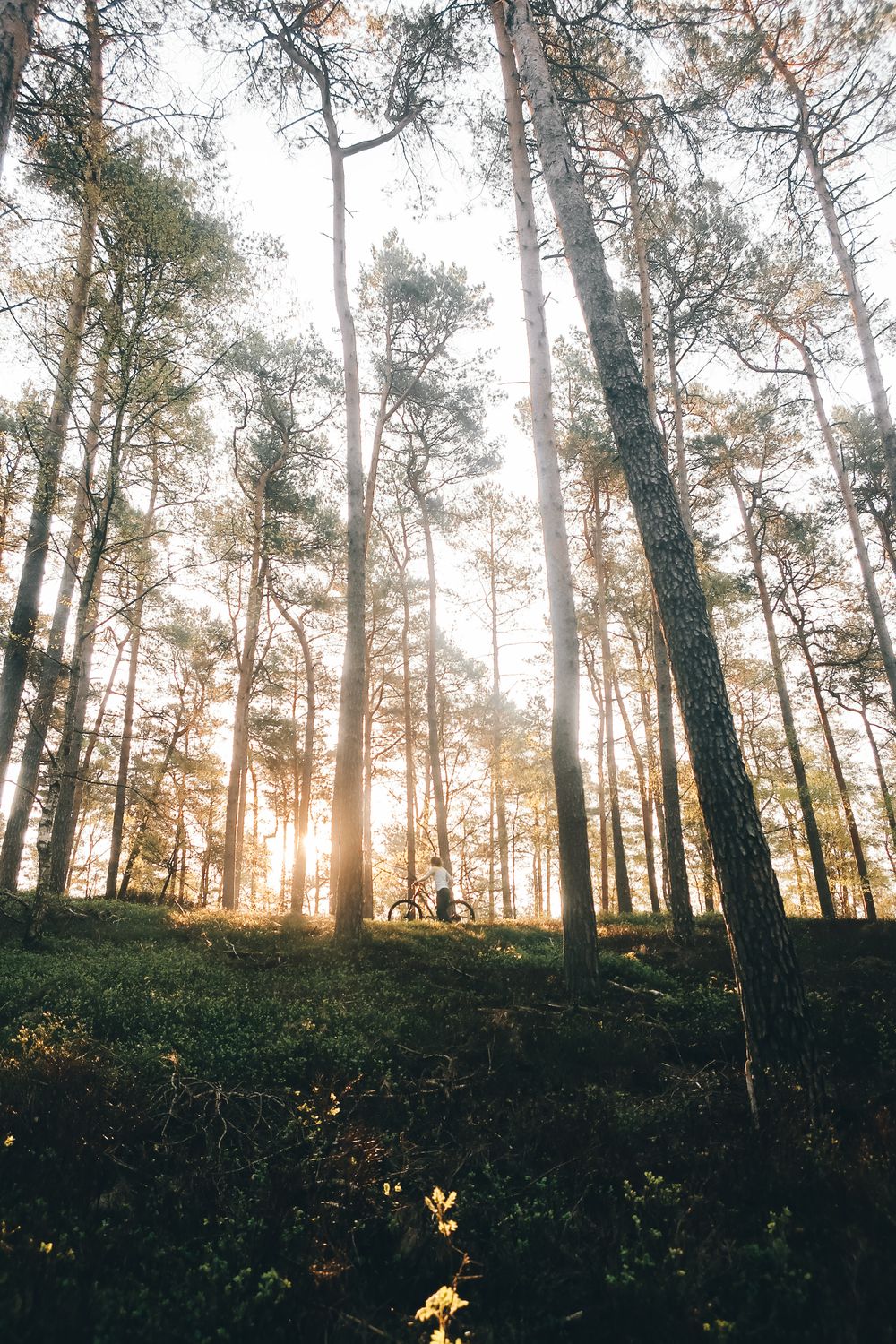 Photo credit on Pexels
Driving Safety for Solo Women
Managing Fatigue
Driver fatigue is the number one safety risk on solo road trips, and it is amplified when there is no one to share the driving. Know your limits and respect them.
Drive during your alert hours. Most people are sharpest between 8 AM and 2 PM. Avoid driving during the mid-afternoon slump (2 PM to 4 PM) and late at night (10 PM to 6 AM). Plan your daily schedule around these natural energy patterns.
Take breaks every two hours. Get out of the car, walk around, stretch, drink water. These breaks are not wasted time; they are safety measures that keep your reaction time sharp.
Recognize the warning signs. Frequent yawning, difficulty focusing, drifting between lanes, and not remembering the last few miles are signs that you need to stop immediately. Pull into a safe location and rest. No destination is worth arriving at the cost of your safety.
Prepare your snack game. Dehydration and blood sugar crashes amplify fatigue. Keep a cooler with water, fruit, nuts, and protein snacks within arm’s reach. Avoid heavy meals before driving, as they trigger drowsiness.
Dealing With Other Drivers
Use gas station strategy. When stopping for gas, especially at night, choose well-lit stations at busy intersections. Pay at the pump when possible. If you go inside, lock your car. Be aware of who is around you and do not linger.
Handle tailgaters calmly. If someone is following too closely, change lanes or pull over to let them pass. Do not engage, speed up, or make eye contact. If you suspect you are being followed, do not drive home or to your accommodation. Drive to the nearest police station, fire station, or busy public area.
At rest stops. Use rest areas during daylight hours when they are busy. If you must stop at night, choose rest areas on major highways rather than isolated pulloffs. Park close to the building, lock your car while using the facilities, and be brief.
Personal Safety On the Road
What to Carry
Pepper spray or a personal alarm. These are the two most recommended self-defense items for solo female travelers. A personal alarm emitting 120+ decibels draws immediate attention from anyone nearby. Check local laws about pepper spray before traveling across state or international borders.
A doorstop alarm. This small, inexpensive device wedges under your hotel room door and emits a loud alarm if anyone tries to open it. It provides an extra layer of security beyond the standard hotel lock.
A headlamp. Useful for everything from setting up camp in the dark to changing a tire at night to navigating a power outage. Keeping your hands free while having light is surprisingly important.
Information Management
Be selective about what you share. When strangers ask if you are traveling alone, you do not owe them an honest answer. “My partner is meeting me at the next stop” or “I am catching up with friends” are perfectly acceptable responses. This is not dishonesty; it is a reasonable safety precaution.
Vary your social media posting. If you are sharing your road trip on Instagram, delay your posts by 24 hours so you are never broadcasting your real-time location to a wide audience. Post about yesterday’s location, not today’s.
Register with your embassy. If you are road-tripping internationally, register with your country’s embassy or consulate in the area. The U.S. State Department’s STEP program, the UK’s Locate service, and similar programs in other countries provide travel alerts and make it easier for your government to assist you in an emergency.
 Photo credit on Pexels
Best Solo Female Road Trip Routes
Pacific Coast Highway, USA (California)
Distance: Approximately 650 miles (San Francisco to San Diego) Duration: 5 to 7 days Best Season: April to October
Highway 1 along the California coast is one of the most iconic drives in the world. The route passes through Big Sur, Santa Barbara, Malibu, and dozens of charming coastal towns. Cell service is intermittent through Big Sur, so download offline maps for that section. The towns along the route are tourist-friendly with abundant accommodation options.
Ring Road, Iceland
Distance: Approximately 830 miles Duration: 7 to 10 days Best Season: June to August
Iceland’s Ring Road circles the entire island, passing waterfalls, glaciers, volcanic landscapes, and geothermal hot springs. Iceland is consistently rated the safest country in the world by the Global Peace Index, making it perhaps the ideal destination for a solo female road trip. Gas stations can be far apart in the east and north, so top off your tank at every opportunity. The midnight sun in summer means you will never be driving in darkness.
Great Ocean Road, Australia
Distance: Approximately 150 miles Duration: 2 to 4 days Best Season: December to February
This relatively short but spectacular drive along Australia’s southeastern coast features the Twelve Apostles, lush rainforest, and surf beaches. Australia is generally very safe for solo women travelers, and the towns along the Great Ocean Road are welcoming and well-equipped for tourists.
Garden Route, South Africa
Distance: Approximately 190 miles Duration: 5 to 7 days Best Season: September to April
From Mossel Bay to Storms River, the Garden Route passes through some of South Africa’s most beautiful coastal scenery. Stops include Knysna, Plettenberg Bay, and Tsitsikamma National Park. This route requires more safety awareness than Iceland or Australia, but it is well-traveled and the tourism infrastructure is solid. Stick to established accommodation and avoid driving after dark.
What to Know Before You Go
Test your setup before the trip. If you are car camping, spend a night in your driveway first. If you are using a new tent, set it up at home. If you have never changed a tire, practice now. Discovering equipment problems or skill gaps on the road is stressful and sometimes dangerous.
Trust the process of being alone. The first few hours of driving alone can feel strange, even lonely. By day two, most women describe a shift: the silence stops feeling empty and starts feeling spacious. Your thoughts settle, your senses sharpen, and you begin to actually enjoy your own company in a way that daily life rarely permits.
You can always change the plan. If a stretch of road feels unsafe, skip it. If a campground feels wrong, leave. If you are too tired, stop early. The whole point of a solo road trip is that you answer to no one. Exercise that freedom in both directions — to push forward into adventure and to pull back into safety. Keep the right safety apps on your phone for peace of mind on the road.
Come home changed. Before you hit the road, check our packing checklist for solo women to make sure nothing is forgotten. A solo road trip is not just a vacation. It is proof of your own competence, courage, and self-reliance. Every problem you solve alone, every beautiful moment you experience without needing to share it immediately, every night you spend in a new place having navigated yourself there safely — these experiences build a foundation of confidence that lasts long after the trip ends.
Related Reading
Get the best HerTripGuide tips in your inbox
Weekly guides, deals, and insider tips. No spam, unsubscribe anytime.