How to Choose Safe Accommodation as a Solo Female Traveler
From hostels to hotels to homestays, learn exactly how to evaluate and choose safe, comfortable accommodation when you are traveling alone as a woman.

This post may contain affiliate links. Disclosure
Where you sleep determines how you feel. A solo female traveler who rests well in a secure, comfortable space starts each day with energy, confidence, and optimism. One who spends the night anxiously listening to a broken lock or sleeping in a neighborhood that feels unsafe starts each day depleted. Over a multi-week trip, the cumulative impact of good versus poor accommodation choices is enormous.
Choosing accommodation as a solo woman involves a different calculus than choosing as a couple or a group. Security features that are irrelevant when you have a travel partner become essential when you are alone. Location, which is always important, takes on heightened significance when you are navigating unfamiliar streets alone at night. And the social environment of your accommodation, from the isolation of a private apartment to the community of a good hostel, shapes whether you connect with other travelers or spend your evenings alone.
This guide walks through every accommodation type available to solo women travelers, with specific criteria for evaluating safety, comfort, and value in each category.
General Safety Criteria for Any Accommodation
Regardless of the type of accommodation, apply these evaluation criteria before booking.
Location Assessment
Use Google Maps Street View. Before booking, virtually walk the route from the accommodation to the nearest public transit stop, the nearest main street, and any attractions you plan to visit. Look for: well-lit streets, residential activity (people walking, shops open), and proximity to transportation. Avoid accommodations on dark, isolated streets or in areas that appear deserted at night.
Check GeoSure. The GeoSure app provides neighborhood-level safety scores including a specific Women’s Safety rating. Check the score for the exact neighborhood of any accommodation you are considering.
Read between the lines in descriptions. “Up-and-coming neighborhood” sometimes means gentrifying and potentially unsafe at night. “Authentic local experience” sometimes means far from tourist infrastructure and transport. “Quiet” sometimes means isolated. Cross-reference positive descriptions with independent reviews.
Review Mining
Search for solo female reviews specifically. On Booking.com, filter reviews by “solo travelers.” On Airbnb, search the reviews for terms like “solo,” “alone,” “woman,” “female,” and “safety.” Other solo women’s experiences are the most reliable predictor of yours.
Look for red flags in reviews: Mentions of broken locks, noise problems, uncomfortable encounters with staff or other guests, unsafe neighborhoods, or difficulty contacting the host. A single negative review among hundreds of positive ones is probably fine. A pattern of safety concerns is a dealbreaker.
Check recency. Reviews from two years ago may not reflect current conditions. Properties change ownership, neighborhoods evolve, and maintenance degrades. Prioritize reviews from the past six months.
Arrival Planning
Know your check-in process before you arrive. Solo women are most vulnerable during the transition from airport to accommodation, particularly if arriving at night. Understand exactly how to reach your accommodation and what the check-in procedure involves. Self-check-in through a lockbox at midnight in an unfamiliar neighborhood is a different experience than a 24-hour front desk greeting you by name.
Pre-arrange airport transport. Have your first ride pre-booked (hotel shuttle, reputable airport transfer, or ride-hailing app) rather than negotiating with taxi drivers in an unfamiliar terminal.
 Photo credit on Pexels
Hostels
Hostels are the social hub of the solo travel world. A good hostel connects you with fellow travelers, provides community, and costs a fraction of hotel prices. A bad hostel leaves you sleep-deprived, uncomfortable, and insecure.
What to Look For
Female-only dorms. This is non-negotiable for most solo women. Female-only dorms have dedicated bathrooms, locked doors accessible only to assigned guests, and an atmosphere where you can relax without the dynamics that mixed dorms sometimes produce.
Lockers. Secure lockers large enough for a backpack or suitcase, with your own padlock. Without a locker, your belongings are vulnerable whenever you leave the room.
24-hour front desk or security. Someone should be awake and present at the accommodation at all hours. This deters unauthorized access and provides a point of contact if you have a problem at night.
Reviews from solo women. Specifically search for how other women rated the hostel’s atmosphere, security, and social environment.
Common areas that encourage socializing. A good common room, bar, kitchen, or rooftop creates the natural social environment that makes hostels worth staying in. Without these, you are paying for a bunk bed without the community benefit.
Hostel Safety Checklist
On arrival, quickly verify:
- The door to your room locks and you have the key/code
- The locker works with your padlock
- The window locks properly (if ground floor)
- The bathroom lock works
- You know the fire exit locations
- The front desk or common area is staffed
Best Hostel Booking Platforms
Hostelworld: The largest platform with the most comprehensive review system. Filter by “female dorm available” and sort by rating.
Booking.com: Increasingly competitive hostel listings with good reviews and often better cancellation policies than Hostelworld.
Google Maps: Check Google reviews for recent, local perspectives that may not appear on booking platforms.
Hotels
Hotels provide privacy, security, and predictability. For solo women who prioritize rest and personal space, a mid-range hotel eliminates many of the anxieties associated with shared accommodation.
What to Look For
Interior-access rooms. Rooms accessed from an interior hallway (rather than an exterior walkway facing a parking lot) are significantly more secure. Major hotel chains (Marriott, Hilton, IHG, Accor) default to interior access.
Electronic key cards. Key card systems are more secure than physical keys, which can be copied. Modern key cards can also be reprogrammed between guests, preventing access by previous occupants.
Well-lit parking and entrance areas. If you are arriving by car or returning on foot after dark, the path from the entrance to the parking area should be well-lit and visible.
24-hour front desk. Essential for security and for assistance if you have any issues during the night.
Location near public transport. Being able to walk to a bus stop, metro station, or train station without a long walk through quiet streets at night is a meaningful safety factor.
Hotel Safety Tips
Request a room on floors 2 through 6. High enough to deter break-ins through windows, low enough for fire department ladders to reach.
Use the deadbolt and chain. Always engage both when you are in the room.
Verify knocks before opening. If someone knocks claiming to be maintenance, call the front desk to verify before opening the door.
Use the “Do Not Disturb” sign. This signals that the room is occupied, which deters opportunistic intrusion. You can leave it on the door even when you are out.
Hide the room number. When the front desk hands you your key card, they should not announce your room number loudly. If they do, request a different room.
Airbnb and Vacation Rentals
Private rentals offer independence, kitchen access, and the feeling of having your own space. They also require more due diligence than hotels or hostels.
What to Look For
Superhost status. Airbnb Superhosts have consistently high ratings, low cancellation rates, and responsive communication. For solo women, Superhost listings are significantly safer bets than new or poorly-reviewed hosts.
Detailed reviews from solo women. As with all accommodation, other solo women’s experiences are your best guide.
Entire place vs. private room. An entire apartment gives you complete privacy and control over your space. A private room in someone’s home gives you a host who can provide local advice and a human presence, which some solo travelers find comforting. Both are valid options; the choice depends on your preference for privacy versus company.
Self-check-in. Lockboxes and smart locks allow you to arrive and settle in without coordinating with a host. This is convenient for late arrivals and provides independence. However, it also means there is no one to greet you or verify your identity, which has both positive and negative security implications.
Building security. In apartment buildings, look for properties with secure entry systems (intercom, key fob), well-maintained common areas, and adequate lighting.
Airbnb Safety Tips
Verify the listing address on Google Maps. Confirm the neighborhood matches the description and that the street appears safe and residential.
Communicate through the platform. Keep all communication within the Airbnb messaging system, which provides a record and platform protection. Be cautious of hosts who insist on communicating via WhatsApp or email.
Check the house rules. Specifically look for any rules that seem unusual or that would restrict your freedom (locked access at certain hours, restrictions on visitors, or unexpected shared spaces).
Trust your arrival instinct. If the property does not match the listing or you feel unsafe upon arrival, contact Airbnb immediately. Their customer service can rebook you and in many cases will cover the difference.
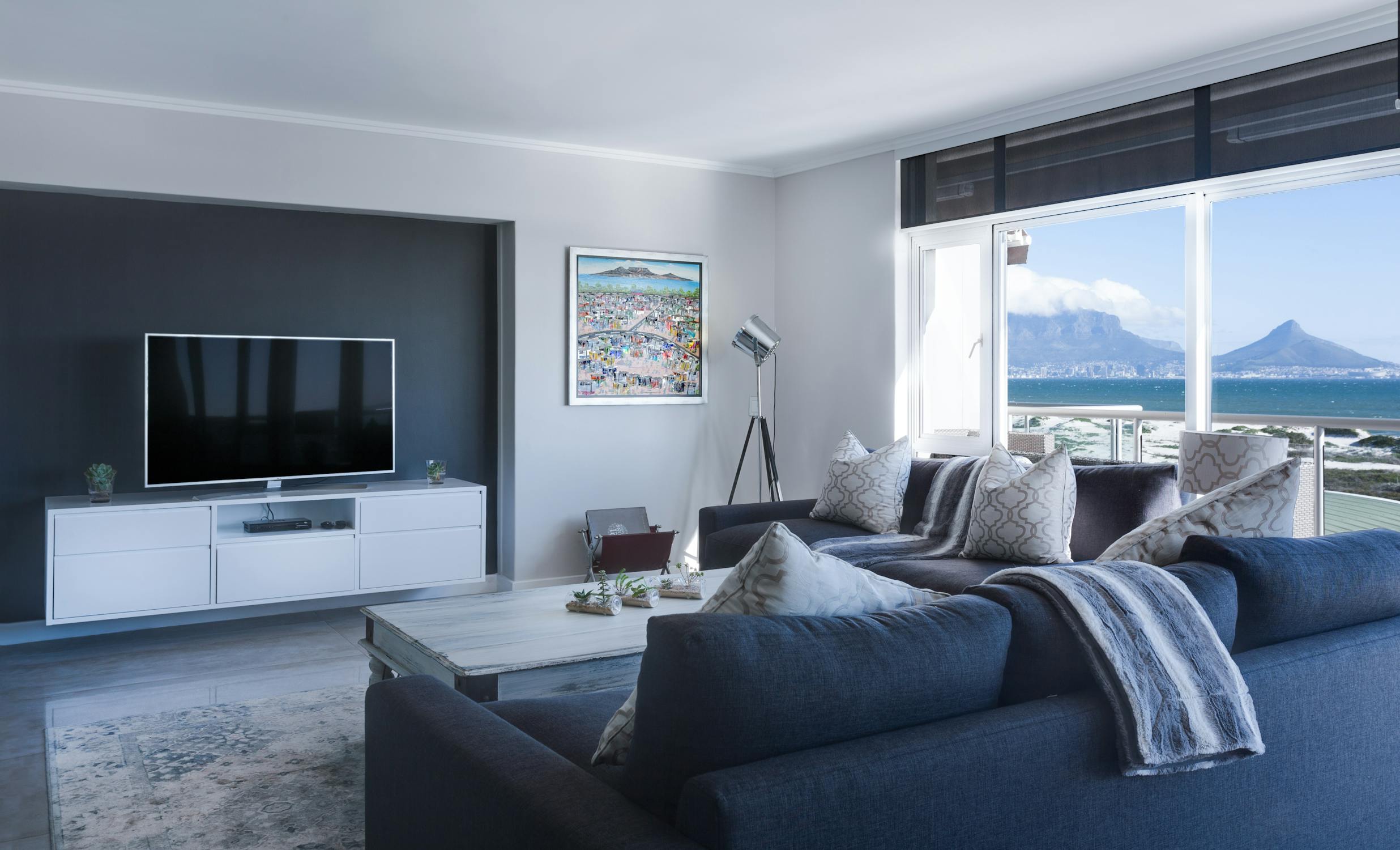 Photo credit on Pexels
Guesthouses and Boutique Hotels
Guesthouses and small boutique hotels often provide the best of both worlds: the security and privacy of a hotel combined with the personal touch and social opportunities of a hostel. They are particularly common in Southeast Asia, Central America, Southern Europe, and North Africa.
Advantages for solo women:
- Hosts who know the neighborhood and can provide safety advice
- Small guest populations where you are noticed and looked after
- Breakfast service that creates natural social interaction with other guests
- Personal attention that large hotels cannot provide
What to check:
- Is there a lock on your room door (not just a padlock on the outside)?
- Is the building secure at night?
- Are there other guests (not just you alone in a building with the host)?
- Can you contact the host at any time if you have a problem?
Camping and Dormitory Accommodation
For budget travelers and adventure-seekers, camping and dormitory accommodation offer unique experiences with specific safety considerations.
Campgrounds: Choose established campgrounds over wild camping. Select sites with visibility, proximity to other campers, and camp hosts. Arrive before dark. Lock valuables in your vehicle.
Buddhist temple stays (Japan, Korea): Extremely safe, highly structured, and culturally enriching. Separate sleeping arrangements for men and women.
Monastery and convent stays (Europe): Several European countries offer accommodation in working monasteries and convents. The environment is peaceful, safe, and affordable.
Unique Accommodation Experiences for Solo Women
Beyond the standard categories, several accommodation types offer distinctive experiences particularly suited to solo women travelers.
Women-Only Accommodation
A growing number of properties cater exclusively to female guests. These range from capsule hotels in Japan (like Nadeshiko Hotel Shibuya) to guesthouses in Southeast Asia to women’s floors in co-living spaces. The shared gender identity of all guests creates an environment of implicit trust and comfort that some solo women find liberating.
Co-Living Spaces
For digital nomads and longer-term travelers, co-living spaces (Selina, Outsite, Sun and Co) combine private rooms with shared kitchens, living areas, and coworking facilities. The built-in community eliminates the isolation that can come with renting a private apartment, while still providing personal space. Many co-living spaces host regular social events, making them excellent for building friendships.
Farm Stays and WWOOFing
Working on organic farms through WWOOF (World Wide Opportunities on Organic Farms) provides free accommodation and meals in exchange for 4 to 6 hours of daily farm work. This is an excellent option for budget travelers who want cultural immersion, physical activity, and a family-like environment. Most WWOOF hosts are accustomed to solo female travelers and provide safe, welcoming environments.
House Sitting
Platforms like TrustedHousesitters and MindMyHouse connect travelers with homeowners who need someone to watch their property (and often their pets) while they are away. You get free accommodation in a private home; they get peace of mind. Solo women with strong references can access beautiful properties worldwide at no cost.
Convent and Monastery Stays
In Italy, Spain, Portugal, and other European countries, working convents and monasteries offer guest rooms to travelers. The accommodations are simple but clean, the environments are peaceful and safe, and the cost is typically very low. Some include meals prepared by the religious community. The experience is unique and deeply atmospheric.
Price vs. Safety: Finding the Balance
Budget constraints are real, but there are certain compromises that are not worth making for the sake of saving money.
Never compromise on: Functional locks, safe neighborhood, ability to contact someone if you have a problem, and clean bedding.
Acceptable compromises: Shared bathrooms, smaller rooms, fewer amenities, less central locations (as long as the neighborhood itself is safe and well-connected by transit), and simpler decor.
Budget strategies that maintain safety:
- Book female-only dorms in well-reviewed hostels ($15-30/night)
- Use last-minute hotel booking apps (HotelTonight) for discounted rates at quality hotels
- Travel during shoulder season when prices drop significantly
- Stay in residential neighborhoods rather than tourist centers (often cheaper and safer)
- Use points and loyalty programs to upgrade your accommodation
What to Know Before You Go
Your accommodation is your home base, your retreat, your place of rest and recovery. Getting it right is not a luxury; it is a foundation that everything else in your trip is built upon.
Invest time in research before booking. Our guide to the best hostel chains for solo women is a great starting point. Read the reviews, check the maps, verify the security features, and plan your arrival. A few hours of pre-trip research prevents the 3 AM anxiety of lying in a bed you do not feel safe in. And when you find a place that feels secure and welcoming, you have given yourself the gift of traveling from a position of comfort rather than vulnerability.
That comfort radiates outward into everything you do. Pair good accommodation with a solid budget travel strategy for the best experience: the confidence with which you explore, the openness with which you meet people, and the quality of rest that keeps you alert, energized, and ready for whatever the next day brings.
Related Reading
Get the best HerTripGuide tips in your inbox
Weekly guides, deals, and insider tips. No spam, unsubscribe anytime.